There is something about the way disability is treated in Nigeria that I think we don't talk about enough. Sometimes it is obvious. A building has no accessible entrance. A bus is practically impossible for someone using a wheelchair to board. A website cannot be properly used with assistive technology...
Other times, it is in the little things. Someone takes longer to communicate and people become impatient. Someone who is deaf/hard-of-hearing asks for something to be repeated and you can sometimes see the frustration on the other person's face. Someone needs help navigating a space and suddenly they are treated as though they are slowing everyone down.
It is easy to look at these things individually, but together they say something about the environment we have created. We expect people to adapt to the world around them, even when that world was never designed with them in mind.
We Have Laws
Yup. Nigeria is not without policies for people with disabilities. The Discrimination Against Persons with Disabilities Act became law in 2019 and created protections around accessibility, discrimination, education and employment. The law also provides that persons with disabilities should constitute at least 5 percent of employment in public organisations where possible.
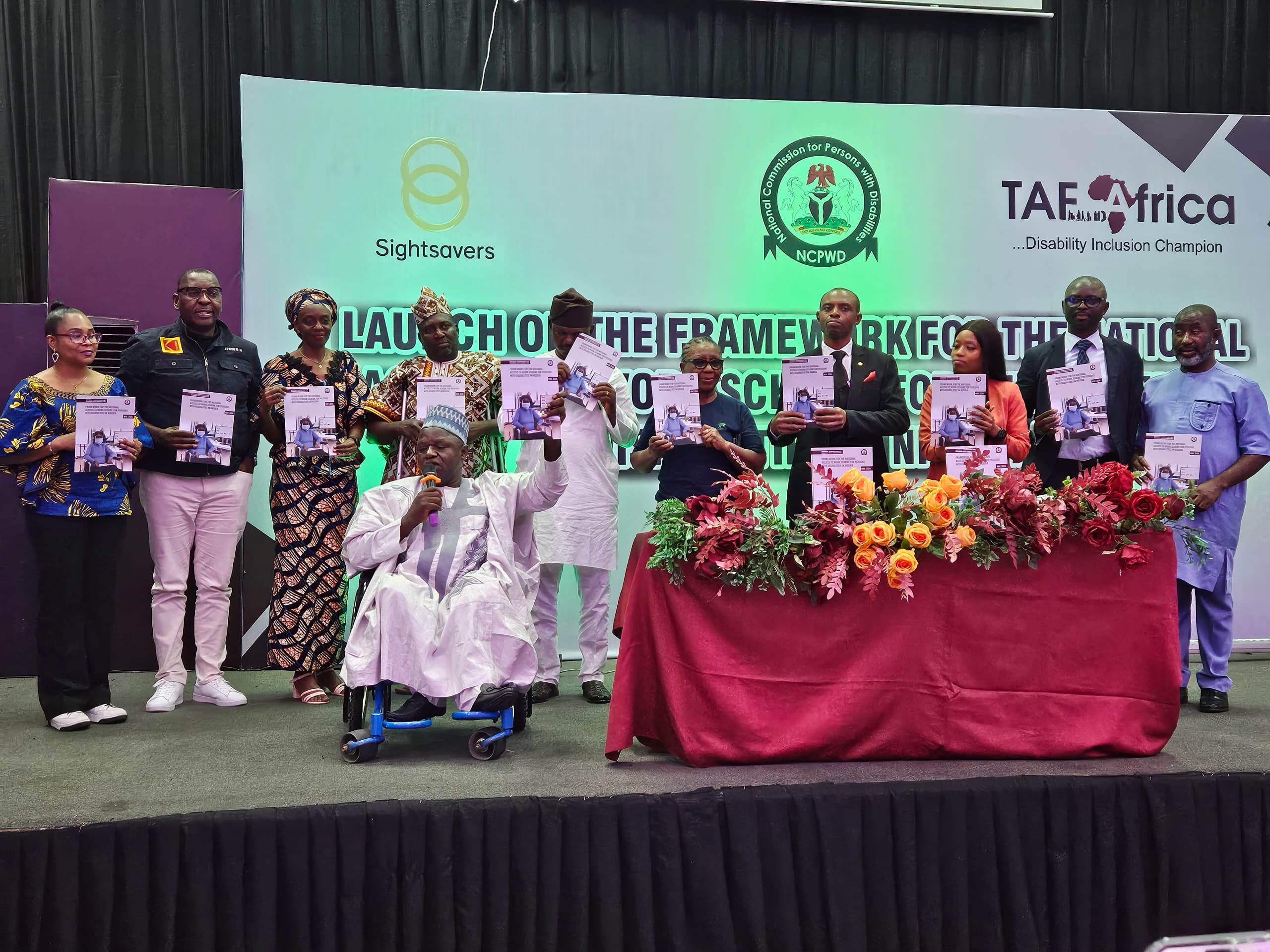
There are initiatives too. National Commission for Persons with Disabilities exists specifically to protect and promote the rights of people with disabilities. More recently, initiatives such as the National Access to Work Scheme have been introduced to provide assistive devices and technology for persons with disabilities working in private organisations.
So things exist. The harder question is how much of this is actually felt by the people it is meant to serve. Hmmm
Having a law and experiencing the effect of that law are two very different things, you know. A person looking for work does not experience inclusion because a policy document exists somewhere. They experience inclusion when they can apply for a job without unnecessary barriers, attend an interview with the accommodation they need, and be assessed based on what they can actually do.
They experience it when the office, the tools they use, and the people around them make room for their needs without treating accommodation as favouritism or disability as inability.
Then There Is Employment
This is where the conversation becomes uncomfortable. We talk a lot about diversity in the corporate world. Companies publish photos, celebrate international awareness days and talk about inclusive workplaces. But how often do we talk about disability when discussing diversity in Nigeria?
How many companies actually know how many employees with disabilities they have? How many recruitment platforms have been tested for accessibility? If a deaf applicant is invited to an interview, can the organisation provide captions or another reasonable way for that person to communicate "effortlessly"?
If someone using a wheelchair gets the job, can they independently enter the building? If a blind employee joins the company, can they use the software everyone else is expected to use?
These sound like small questions until you are the person whose entire opportunity depends on the answer.
And while Nigeria's law provides for at least 5 percent representation within public organisations where possible, the continued push for implementation shows that putting something into law does not automatically make it a reality.
There is also another problem. We do not appear to have a simple, current national figure showing what percentage of Nigerian private companies employ people with disabilities. That absence matters because before we can seriously talk about improving representation, we need to know where we currently stand.
Do We Even Know How Many People We Are Talking About
This was probably the part that surprised me most. Different sources have produced very different estimates of the number of people living with disabilities in Nigeria.
The National Bureau of Statistics reported in its 2019 WASH survey that about 6 percent of the population was living with disabilities. A later National Bureau of Statistics household survey covering 2023 and 2024 reported that about 7 percent of people aged five and above had a disability.
A World Bank assessment, using an earlier World Health Organization estimate, referenced about 29 million Nigerians living with disabilities. The figures are not necessarily measuring disability in exactly the same way, which is part of the problem. Different definitions, different surveys and different methods can produce very different pictures.
But if we do not have consistently collected and detailed data, how do we know what opportunities are needed? How many deaf Nigerians (who are educated) are looking for work? How many people with physical disabilities are unemployed? How many organisations employ people with disabilities? Which industries are doing better? Which states have the largest accessibility gaps?
These are not just interesting statistics. They help determine where funding goes, what programmes are created and whether those programmes are even working.
How do you create opportunities for a population you have not properly counted?
The Everyday Part Matters Too
Government and companies have responsibilities, but there is also something much more basic. How we treat people. Seriously.
Accessibility is not always a ramp, a screen reader or a piece of legislation. Sometimes it is patience. It is understanding that somebody might communicate differently from you. It is not making someone feel stupid because you had to repeat yourself. It is giving someone a little more time to complete something.
It is also asking what someone needs instead of deciding what they are capable of. I think this is one area where we still have a lot of work to do in Nigeria.
What I sometimes find amusing is that we are often very good at helping when disability is "presented as charity". We donate, we sympathise and we say encouraging things. But inclusion asks for something different. How ironic. *eyeroll*
It asks us to see people with disabilities as participants, employees, customers, professionals, entrepreneurs and parents. As people who should be able to move through society without constantly having to explain why they deserve to be considered.
You cannot build an inclusive society if inclusion only begins when a disabled person asks for it.
There have been laws, commissions, programmes and initiatives created around disability in Nigeria. Some of them are genuinely important steps, but their success should not only be measured by their existence.
It should be measured by whether people with disabilities can actually feel the difference. Can they get jobs? Can they use public spaces? Can they access digital services? Can they receive the accommodation they need without having to fight for it every time?
Can they participate without first proving that they belong?
Until those answers begin to change consistently, there is still a gap between the Nigeria we say we are building and the Nigeria people with disabilities actually experience.
And maybe that is where the real conversation about inclusion needs to begin. If it ever does.
Lanre Malumi
https://lanremalumi.laravel.cloud
Most days, Lanre is somewhere between a Figma file and a Laravel project, trying to make both behave. Accessibility isn't an afterthought for him. "Works for everyone" is the actual bar, not a nice-to-have. When he's not working on something, he's probably watching a movie, overthinking a scene, or adding yet another title to his watchlist.
You might also like...
08 Aug, 2026
Connection Beyond Sight and Sound
A few days ago, I came across a video on Instagram of a woman meeting her newborn grandchild. She was both blind and deaf. In the video, someone gentl...
 0
0
25 Aug, 2026
Laravel 13.26 Made Queue Rerouting Much Cleaner
I recently wrote about some of the queue improvements in Laravel 13.25, especially the ability to pause all queues at once. Then Laravel 13.26 showed...
17 Aug, 2026
Temidayo Malumi: One Year After 🕊️
Today marks one year since we lost you. It still feels surreal to me that you're no longer with us. Not a day goes by without you coming to mind, just...
Comments
2 approved comments
Faith
25 Aug 2026
It’s truly sad. We should do better, tbh.